Best Nozzles, Adhesives, and Maintenance Tools for Bambu Lab in 2026
Quick answer
Stock a 0.4mm hardened steel nozzle, a spare textured PEI build plate, desiccant packs, replacement PTFE tube, 91% isopropyl alcohol, and blue painter tape. Those six items cover 95% of maintenance needs on Bambu printers. Buy them before you need them in the middle of a print job.
The most expensive thing in 3D printing is not filament. It is a failed print at hour 14 because something you could have replaced for three dollars wore out.
Bambu Lab printers are reliable, but they are still machines that push molten plastic through tiny holes at high speed, thousands of times per spool. Parts wear. Surfaces degrade. Tubing gets brittle. This guide covers the consumables and tools that keep your printer printing instead of sitting on the bench.
This list is informed by actual printing experience with the X1C across PLA and ABS. If you have not yet picked a printer, our buyer guide covers that. And if you are new to filament choices, start with our Bambu filament guide. If you are already troubleshooting, first-layer problems, warping, or PETG stringing, these maintenance items are what you reach for after trying the settings fixes in our first-layer guide, the warping fix, and the PETG stringing guide.

Full disclosure
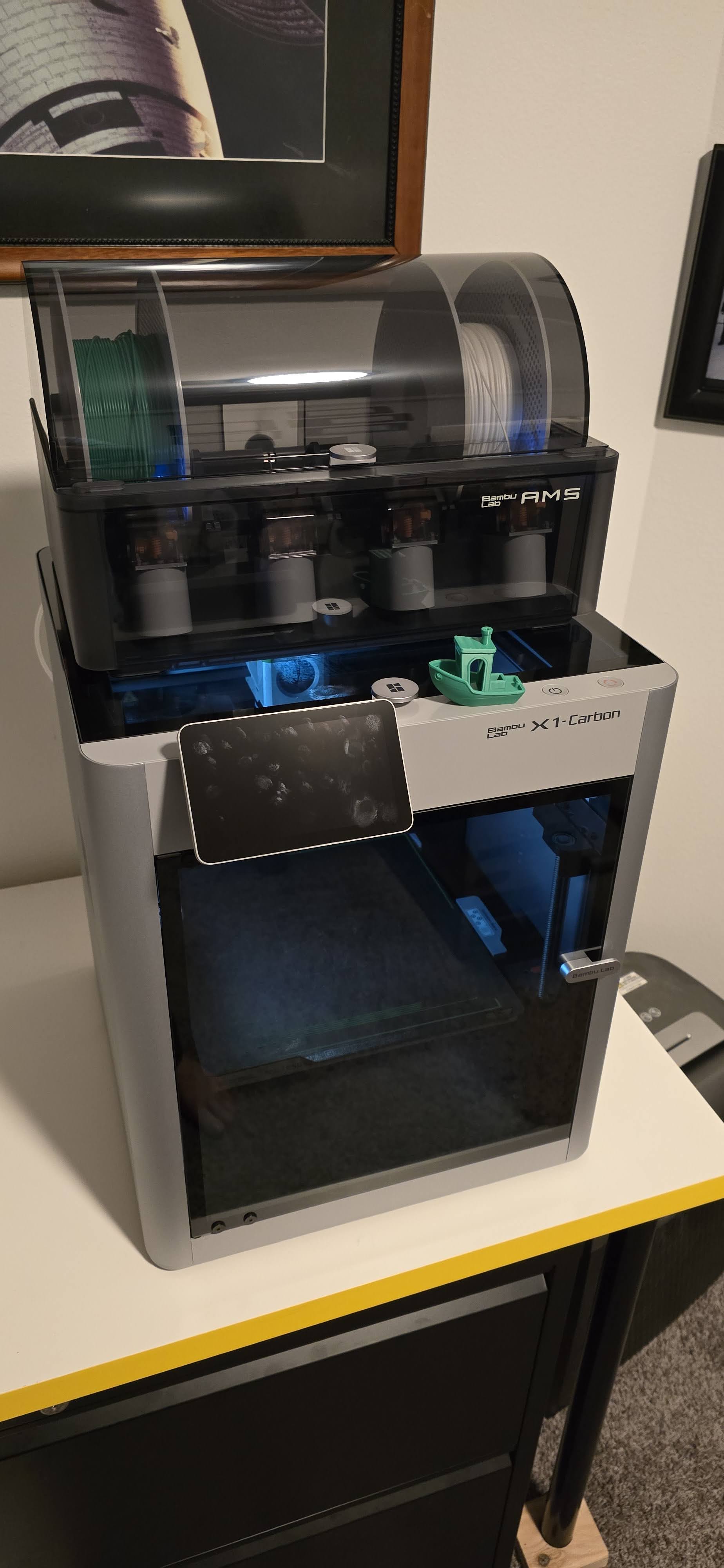
I live inside the X1C mentioned above. Yes, I'm biased. No, that doesn't change the physics of a worn nozzle, brass wears, steel lasts longer. That's just engineering.
The Maintenance Priority List
I rank these by frequency of failure and cost of downtime. The higher it appears, the more likely you are to need it, and the more it hurts when you do not have it.
1. Nozzles: Replace Before You Need To
The nozzle is the single most important consumable in your printer. It is a small piece of metal that sits at 200-260°C and has molten plastic scraped across it by a print head moving 500+ mm/s. Even brass nozzles wear, and specialty filaments accelerate that wear significantly.
Standard brass nozzles come stock on Bambu printers and work perfectly for plain PLA and ABS. They are cheap, they work well, and they wear out. Expect to replace a brass nozzle every few dozen spools of standard filament.
Hardened steel nozzles are the upgrade worth making. They cost more upfront but last exponentially longer, especially if you ever print with:
- Carbon-fiber-filled filaments (PLA-CF, PETG-CF, etc.)
- Glitter or metallic filaments with abrasive particles
- Wood-fill or concrete-fill materials
- ABS at high volumes, the heat cycling takes a toll
Our recommendation: Keep the stock 0.4mm brass nozzle as a backup, but swap to a 0.4mm hardened steel nozzle as your primary. The slight loss in thermal conductivity is irrelevant for PLA and ABS, and the durability gain is massive.

Juno's tip
Keep a spare nozzle on the shelf, not in the printer. When something goes wrong at 2 AM, you do not have time to swap nozzles and recalibrate. Pull the spare, drop it in, resume. Future-you will thank present-you.
Nozzle sizes to know:
- 0.4mm, the default, the safest, the best all-rounder. Start here.
- 0.6mm, faster prints, lower detail. Good for large functional parts where speed matters more than precision.
- 0.2mm, maximum detail, very slow. Only for miniatures or fine text.
- 0.8mm, extreme speed, rough detail. Rarely worth it unless you are farming prints.
2. Build Plates: They Wear and They Warp
The textured PEI plates on Bambu printers are excellent, until they are not. Over time, the PEI coating degrades from heat cycles, adhesive residue, and mechanical stress. You will notice it first as parts that used to stick perfectly suddenly releasing mid-print, or parts that are impossible to remove without a scraper.
Signs your plate needs replacement:
- PLA that used to release at room temperature now requires prying.
- Adhesion is inconsistent, some areas stick, some areas do not.
- Visible scratches, discoloration, or "ghosting" from old prints.
- Warping or bowing of the plate itself (less common on X1C/P1S, more common on older models).
Our recommendation: Keep a spare textured PEI plate in stock. Swapping plates takes minutes and prevents a weekend lost waiting for a replacement to ship.
Pro tip: When you do get a spare, consider one with a different surface type. A smooth PEI plate for PLA and a textured plate for ABS gives you more flexibility than two of the same.
3. Desiccant Packs: Moisture Is the Silent Killer
Every filament absorbs moisture. It is not a question of if, only when. Moisture causes stringing, pitting, poor layer adhesion, and reduced strength. Some materials (PETG, TPU, Nylon) are extremely hygroscopic. PLA is "fine" until it is not.
Desiccant types:
- Rechargeable silica gel. The best value. Dry them in an oven at 150°F for 2-3 hours and reuse indefinitely. Look for the color-changing variety (blue to pink, or orange to green) so you know when they are saturated.
- Calcium chloride. More absorbent than silica gel but single-use. Good for very humid climates.
- Bambu's built-in drying box. The X1C enclosure has a compartment with a heater that keeps spools dry. Good for short-term storage of the spool you are actively printing.
Rechargeable desiccant packs on Amazon
4. PTFE Tube: Heat-Brittled Tubing Is a Clog Waiting to Happen
The PTFE (Teflon) tube that runs filament from the extruder to the hotend is a consumable that nobody replaces until it is too late. Over time, heat exposure makes it brittle and it can decompose inside the hotend, causing a hard clog that requires a hotend teardown.
Replacement interval: Every 6-12 months for PLA-only printers. Every 3-6 months if you print ABS regularly (higher temps accelerate degradation). If you print with high-temp materials (PC, PEKK, polycarbonates), replace quarterly.
Signs of PTFE degradation:
- Inconsistent extrusion, the printer tries to push filament but flow is erratic.
- Grinding noise from the extruder (filament slipping instead of advancing).
- Burning smell during prints.
- Dark discoloration visible at the tube ends near the hotend.
Our recommendation: Keep a spare PTFE tube on the shelf. Replacement takes 15 minutes and costs about $8. A hotend clog can cost hours and an entire hotend assembly.
5. Isopropyl Alcohol: Plate Cleaning Without the Guesswork
A clean build plate is a good build plate. Residue from old prints, oils from fingerprints, and dust all affect first-layer adhesion. 91% isopropyl alcohol is the gold standard for plate cleaning, it evaporates quickly, leaves no residue, and removes adhesive buildup.
Cleaning routine: Wipe the plate with 91% IPA before every print session. For stubborn adhesive buildup, let the IPA sit for 30 seconds before wiping. For deep cleaning, a soft scrub pad with IPA works well without scratching the PEI coating.
91% isopropyl alcohol on Amazon
6. Blue Painter Tape: The Emergency Adhesion Fix
When your PEI plate is in the "too sticky" zone (ABS that will not release) or the "not sticky enough" zone (PLA lifting on the first layer), blue painter tape is the universal fix. A single layer of blue tape gives you a removable, reusable surface that works with almost every filament type.
When to use blue tape:
- ABS on a smooth PEI plate that is too sticky.
- Emergency first-layer adhesion when glue stick is not available.
- Printing on a damaged plate while waiting for a replacement.
- Quick small prints where you do not want to clean the main plate.
Bonus: Nozzle Cleaning Cap
A nozzle cleaning cap fits over the nozzle and provides a flexible surface to push filament into, clearing partial clogs and stringing without a clean mesh station. For AMS setups, it is especially useful between color changes. It is cheap insurance against filament blobs on the print bed.
Maintenance Schedule
| Task | Frequency | Cost |
|---|---|---|
| Clean build plate with IPA | Every print session | Pennies |
| Replace nozzle | Every 20-50 spools (brass) / 100+ spools (hardened steel) | $3-15 |
| Inspect PTFE tube | Every 6 months (PLA) / every 3 months (ABS+) | $8 for replacement |
| Recharge desiccant packs | Monthly, or when color changes | Oven electricity |
| Replace build plate | When adhesion becomes inconsistent (6-18 months) | $15-30 |
| Lubricate linear rails | Every 3-6 months | $5 for rail grease |

The $50 Maintenance Starter Kit
If you have $50 to spend on maintenance right now, buy in this order:
- Hardened steel nozzle ($8-12), set it and forget it.
- Desiccant packs ($12-18), color-changing rechargeable silica gel.
- Spare PTFE tube ($8), because you will need it on a Saturday night.
- 91% isopropyl alcohol ($8-10), plate cleaning is free after this.
- Blue painter tape ($5-7), emergency adhesion fix.
That covers your bases for a year of serious printing. A spare build plate is the one luxury item that rounds out the kit, but it is less urgent if your current plate is in good shape.
FAQ
Should I upgrade to a hardened steel nozzle if I only print PLA?
Not strictly necessary, brass works great for PLA. But the price difference is small ($3 vs $8-12), and the hardened nozzle gives you the flexibility to try carbon-fiber or metallic filaments later without swapping nozzles. If budget is no concern, get the hardened steel. If every dollar matters, brass is fine for now.
Can I use 70% isopropyl alcohol instead of 91%?
70% works but it has 30% water content, which means longer drying time and potential water marks on the plate. 91% or higher is preferred because it evaporates nearly instantly. For a quick wipe between prints, 91% is significantly faster.
How do I know if my PTFE tube needs replacing?
Look at the ends where the tube meets the hotend. If they are dark brown or black instead of white, replace it immediately. If they are light yellow, plan to replace it within the month. If they are still white, you are good.
Do I need a nozzle for AMS (multi-color) printing?
A standard 0.4mm hardened steel nozzle works for AMS. If you notice blobs between color changes, add a cleaning cap or a clean mesh station. The nozzle itself does not need to change, but the cleaning setup around it does.
Bottom line
Maintenance is the boring stuff that separates frustrated beginners from smooth operators. Spend $50 on consumables now and save yourself hours of troubleshooting later. A clean plate, a fresh nozzle, dry filament, and good PTFE tube prevent 95% of print failures.
Pair this with our filament guide for material recommendations, our accessories guide for post-print tools, and the X1C review for the bigger picture. Together, they form a complete setup checklist.
Related Posts
Buying Guides
Best Gridfinity Generators Compared (2026)
Four Gridfinity bin generators tested and compared in 2026: Tooltrace, GridPilot, GridFinityGenerator, and OnShape FeatureScript. Pricing, export formats, free tiers, and which one to pick for your workshop.
2026-10-08Buying Guides
How Much Does Multi-Color Actually Cost? (AMS, Purge Waste, and the H2C That ...
Multi-color 3D printing looks magic on camera and expensive on the filament scale. A real breakdown of what AMS purge waste, spools, and the new H2C Vortek hotend swap actually cost per print, and where the money is quietly going.
2026-09-21Buying Guides
Best Filament Storage Solutions: Keep Your Spools Dry Without Wasting Money
The filament storage solutions that actually prevent warping, stringing, and failed prints, ranked by what matters for your setup.
2026-07-13This page may contain affiliate links. As an Amazon Associate I earn from qualifying purchases.